Contact Info
-
Sheng'an Building, No. 296 Xinhua Road, Shijiazhuang, Hebei Province
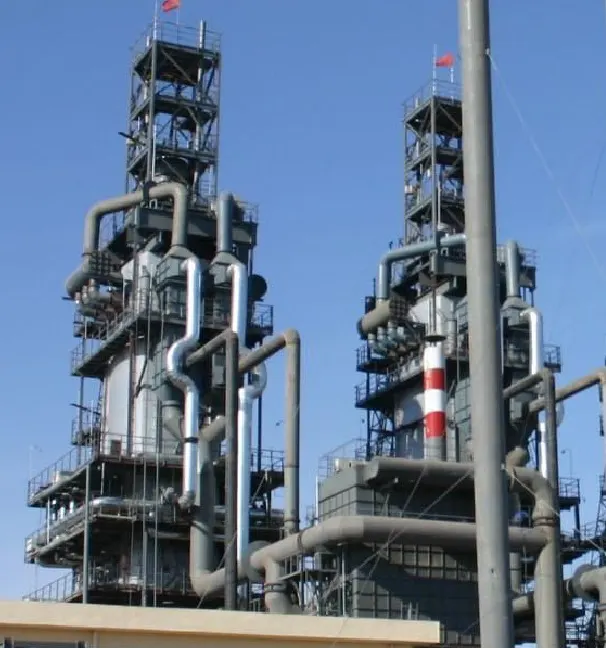
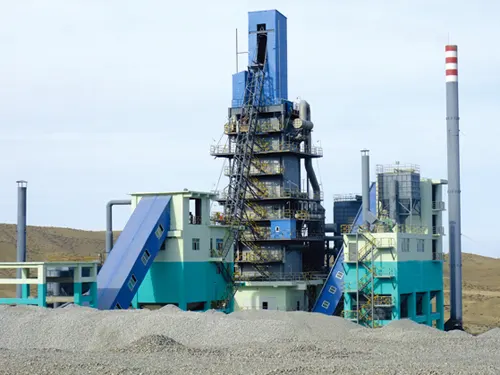
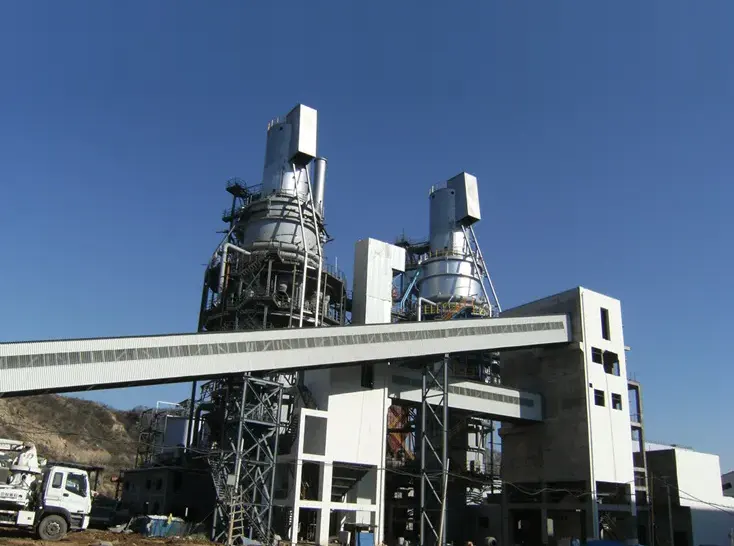
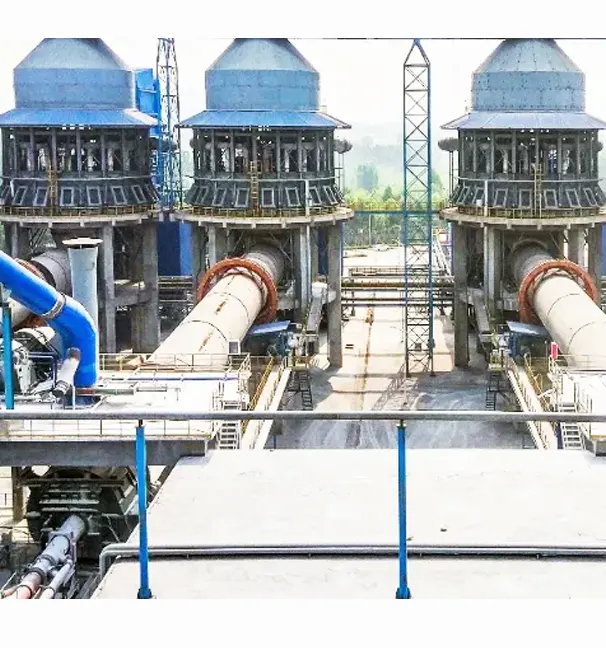
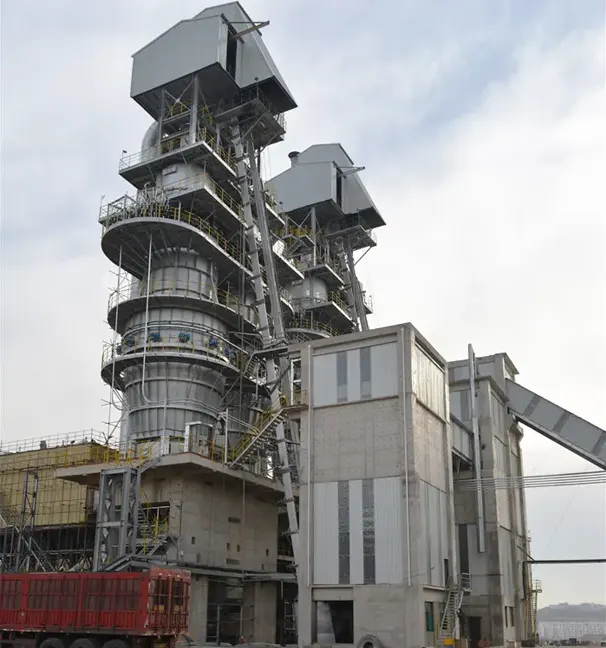
The peripheral burner vertical lime kiln represents a classical approach within the industrial limestone production sector. This equipment employs a vertical tower configuration with refractory-lined interior surfaces, featuring peripheral fuel burners and air intake systems positioned in the lower section, with exhaust gas outlets located at the top. Material enters from the upper section and discharges from the bottom, facilitating counter-current heat exchange between gaseous and solid phases throughout the processing chamber.
Company Background:
HBMER stands as a prominent player in China's lime kiln industry, distinguished by its comprehensive service capabilities that span the entire project lifecycle. The company offers integrated solutions encompassing engineering design, equipment fabrication, on-site installation, operational guidance, technical training, commissioning, and full production startup support. With extensive experience in lime production technology, HBMER has established itself as a leading supplier of energy-efficient kiln systems within the domestic market.
Structural Design Characteristics:
Kiln Body
The equipment utilizes a single vertical shaft configuration, offering significant advantages in terms of reduced spatial requirements. The furnace structure has undergone meticulous optimization, incorporating comprehensive stress analysis through ANSYS software to ensure structural stability and durability under high-temperature operating conditions. The application of proprietary technology enables the masonry structure to achieve uniform strength distribution, effectively reducing localized stress concentration phenomena.
The main structure adheres to compact design principles, maximizing production efficiency within limited spatial constraints through optimization of geometric configurations and material distribution. Precise calculation of stress distribution ensures reliable mechanical performance throughout the equipment's operational lifecycle.
Combustion System
The burner system employs peripheral distribution design, with multiple burners uniformly arranged around the kiln circumference, directing flames radially inward toward the center from the kiln wall. This arrangement ensures uniform thermal energy distribution across the entire calcination zone, effectively preventing localized overheating or insufficient temperature conditions.
Fuel and air undergo thorough mixing at the burner ports before flames project horizontally into the kiln interior, directly heating the descending limestone material. The combustion system design maximizes thermal efficiency while ensuring operational safety and reliability.
Primary Technical Parameters:
Production Scale
The system offers flexible capacity configuration options to accommodate varying operational requirements. Standard capacity specifications include options of 80 tons per day, 100 tons per day, 200 tons per day, 250 tons per day, and 300 tons per day. This diverse capacity range enables the equipment to serve applications from small-medium scale to large-scale production operations.
Raw Material Specifications and Product Characteristics
The feed limestone particle size ranges from 40 to 80 millimeters, ensuring favorable permeability and uniform heating characteristics within the kiln environment. The final product exhibits reactivity of approximately 320 milliliters (measured using 4N hydrochloric acid titration method over a five-minute duration), fully satisfying stringent requirements across metallurgical, chemical, and building materials industries.
The fuel system design accommodates gaseous fuels, including natural gas, coke oven gas, and various combustible gas mixtures. This fuel flexibility enables equipment operation using the most cost-effective fuel option based on local energy supply conditions.
Heat Exchange Process Flow:
Temperature Zoning
During operation, three primary temperature zones form within the kiln structure, progressing from top to bottom in sequence as preheating zone, calcination zone, and cooling zone. Material enters from the kiln top under gravitational force and passes sequentially through each functional zone to complete thermal processing.
In the preheating zone, descending limestone undergoes counter-current heat exchange with ascending hot exhaust gases. The material receives preliminary heating while exhaust gas temperature decreases, enabling effective thermal energy recovery. This counter-current design constitutes the core technical characteristic of traditional vertical kiln systems.
Upon entering the calcination zone, limestone receives final heating treatment from peripheral burner flames. Calcium carbonate decomposes into calcium oxide and carbon dioxide at elevated temperatures. The calcination zone temperature is typically maintained within the optimal range required for limestone decomposition.
The cooling zone occupies the bottom region of the kiln body. Calcined lime undergoes heat exchange with cold air introduced from the bottom before discharging through the kiln base.
Equipment Advantages Analysis:
Structural Reliability
The furnace body employs proprietary structural design, featuring stable masonry structure, compact and reasonable configuration, and uniform stress distribution. Optimization design through ANSYS software stress analysis ensures structural integrity during long-term high-temperature operating environments.
The equipment demonstrates high operational reliability with minimal mechanical wear. Major components exhibit service life exceeding ten years, significantly reducing maintenance costs and downtime while providing stable and reliable production guarantees for users.
Installation Flexibility
The equipment requires minimal floor space with flexible layout options, accommodating various configuration choices based on site conditions. This compact design proves particularly suitable for industrial sites with limited space, providing users with greater site selection flexibility.
Application Areas
This technology plays an important role in steelmaking slag formation processes within the metallurgical industry, while finding extensive application across chemical industry lime production, building materials sector cement manufacturing, and various other industrial domains requiring high-quality lime products. Traditional design combined with modern engineering optimization enables this equipment to maintain significant economic benefits and technical advantages in medium-small scale production scenarios.
Company Service Capabilities:
HBMER provides comprehensive turnkey solutions for lime production projects, including engineering design, equipment manufacturing, installation and commissioning, operational training, and ongoing technical support. The company maintains a proven track record in delivering successful lime kiln installations across various industrial sectors.