Contact Info

High-thrust low-nitrogen burner

High-thrust low-nitrogen burner


Head Structure Advantages
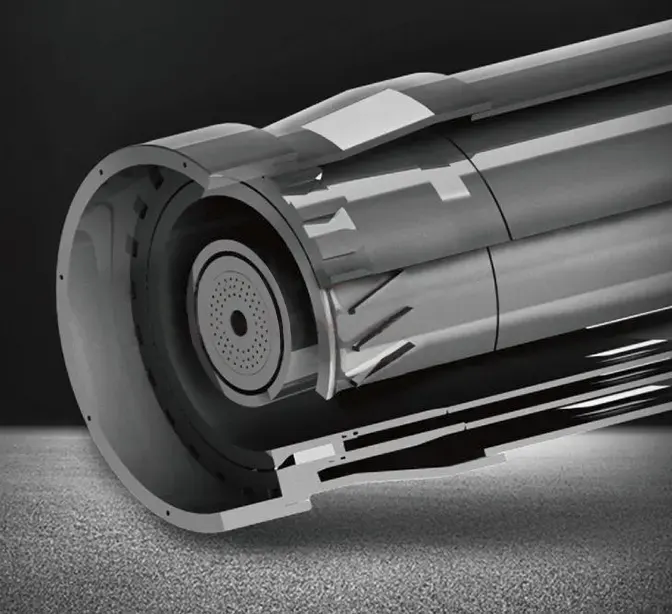
The BN series high-thrust low-nitrogen pulverized coal burner has five internal channels. The nozzle structure is shown in Figure 1, which are ignition channel, central air channel, swirling air channel, fuel air channel and axial air channel from the inside out.
Figure 1 Schematic Diagram of the Head of High-Thrust Low-Nitrogen  Burner

(Flame-holding Cover, Ignition Channel, Central Air Channel, Swirling Air Channel, fuel Air Channel, Axial Air Channel)


High-thrust low-nitrogen burner


Functions and Structural Features of Each Channel:

1. Ignition Channel: Generally used to supply ignition fuel; electronic igniters can be installed inside for ignition; it can also transport other solid fuels such as solid waste.
2. Central Air Channel: Central air enters the central recirculation zone through evenly distributed small holes on the flame stabilizer, which can adjust the pressure and position of the central recirculation zone, stabilizing the flame and protecting the burner head.
3. Swirling Air Channel: The swirling air adopts a spiral vane swirler with low aerodynamic resistance and high swirling intensity. It can effectively promote the mixing and diffusion of pulverized coal and combustion-supporting air, improve the combustion speed and burnout rate of pulverized coal, and obtain the high-temperature flame required for burning cement clinker.
4. Fuel Air Channel: Fuel air (mixture of pulverized coal or gas or Biomass) functions to transport the fuel and adjust the flame shape.
5. Axial Air Channel: The axial air nozzle adopts several specially designed nozzles distributed circumferentially, which inject high-speed air flow and entrain a large amount of high-temperature secondary air. It is the most effective carrier for enhancing fuel combustion and adjusting the thickness and length of the flame, and plays a decisive role in the output and quality of rotary kiln clinker.
6. Flame-holding Cover: Prevents premature flame divergence and protects the nozzle head structure from high-temperature dust erosion.

High-thrust low-nitrogen burner

High-thrust low-nitrogen burner

Related Products